
How Leading Brands Grow Their Business with Professional Digital Marketing: Strategies, Tools, and Insights
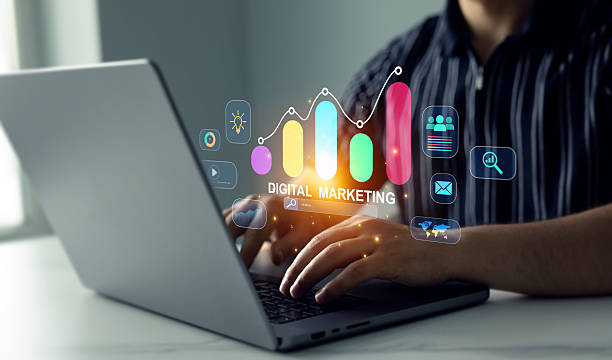
Digital marketing is one of the strongest growth tools for modern businesses. In a crowded online world, successful brands do more than advertise. They connect with people, tell stories, and solve real problems. For example, a well planned digital marketing campaign helped one manufacturing company triple its organic website traffic. Research also shows that storytelling can increase conversion rates. Global brands like Nike, Sephora, and McDonald’s use data, creativity, and technology to create powerful digital experiences.
This article explores the tools, strategies, and insights that leading brands use to achieve sustainable growth through digital marketing.
What Is Professional Digital Marketing?
“Digital marketing is a strategic discipline that converts brand visibility into qualified demand, measurable growth, and scalable performance.” – Ib Knudsen, CEO, Axelris Technologies International, Inc
Professional digital marketing is the strategic promotion of a business using online channels. These include search engines, websites, social media, email, mobile apps, and paid advertising platforms. Unlike traditional marketing, digital marketing is measurable, targeted, and highly adaptable.
Strong digital marketing is built on five core areas:
- Business goals – Marketing supports clear company objectives
- Customer experience – How users interact with the brand
- Content creation – Useful and valuable information
- Channel promotion – Reaching users on the right platforms
- Analytics – Measuring results and improving performance
Digital marketers manage campaigns across multiple channels. They control budgets, track performance, and keep brand messaging consistent.
Because it is adaptable, digital marketing works for both B2B companies focused on long term relationships and B2C brands running fast, emotional campaigns.
Why Digital Marketing Is Essential for Business Growth
Digital marketing is no longer optional. It is essential for businesses that want to stay competitive and grow.
Leading brands invest heavily in digital marketing for several key reasons.
- Measurable Results: Digital marketing lets businesses track everything. This includes clicks, impressions, leads, and sales. Brands can clearly measure return on investment (ROI) and improve campaigns using real data.
- Cost Effective Growth: Digital marketing is often more affordable than traditional advertising. Small and medium businesses can compete with large brands using targeted ads and organic strategies.
- Global Reach: Digital marketing removes location limits. Businesses can reach customers locally or worldwide without opening physical stores.
- Better Customer Targeting: Brands can target people based on age, location, interests, and online behavior. This ensures that messages reach users most likely to convert.
- Stronger Brand Relationships: Personalized digital experiences build trust. Customers are more likely to buy from brands that understand their needs and preferences.
Core Digital Marketing Strategies Used by Leading Brands
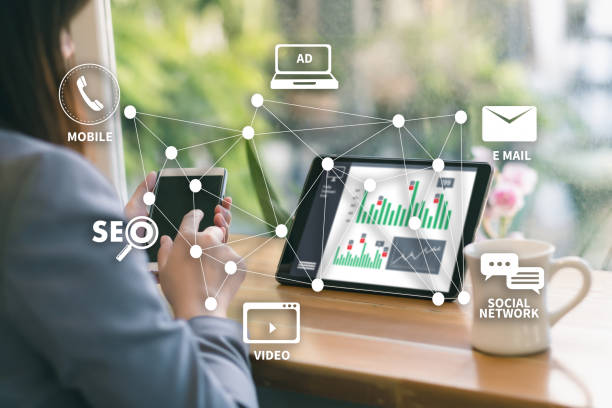
Successful brands don’t rely on a single tactic. They combine multiple strategies into a connected ecosystem. Here are the most effective digital marketing strategies used by leading brands.
1. Search Engine Optimization (SEO)
SEO helps websites rank higher in search engines by optimizing web page elements and content. Effective SEO includes keyword research, page optimisation, and quality link building.
In fact, brands that use location specific SEO have seen significant year over year sales increases. Furthermore, optimizing for conversational keywords rather than generic terms (like “how to fix a leaking shingle roof” instead of “roof repair”) aligns with current AI driven search trends.
2. Content Marketing
Content marketing involves creating valuable content that attracts and engages target audiences without directly selling to them. When executed properly, content marketing establishes brands as thought leaders.
Organizations with documented content strategies are substantially more effective at content marketing. Indeed, content is the backbone of SEO success. Quality, authoritative content remains the primary driver of search engine rankings.
3. Social Media Marketing
Social media marketing connects brands with audiences on platforms where they already spend time. Effective social strategies begin with SMART goals aligned to specific business objectives. The platform selection should align with the audience demographics.
Professionals favor LinkedIn and Twitter, while younger audiences gravitate toward TikTok and Instagram. Strategic consistency across platforms remains essential, with most experts recommending posting at least 3 times per week.
4. Email Marketing & Automation
Email automation involves setting up sequences triggered by specific customer actions. This approach saves time while delivering personalised communications.
Notably, welcome emails generate 320% more income per email than standard promotional messages. Meanwhile, abandoned cart emails help recover lost sales, especially when offering strategic discounts on shipping costs.
5. Pay Per Click Advertising (PPC)
Top brands use PPC advertising to gain instant visibility on search engines and social platforms. They only pay when someone clicks their ad, making it budget-friendly.
PPC allows precise targeting by location, interests, and behavior. Brands also use PPC data to test keywords, ads, and landing pages. When combined with SEO, PPC helps brands reach users at different stages of the buying journey.
6. Affiliate Marketing
Affiliate marketing allows brands to partner with bloggers, influencers, and websites to promote their products. Affiliates earn a commission only when they generate results, such as sales or leads. This makes it a low risk strategy.
Leading brands use affiliates to reach new audiences and increase credibility through trusted voices. Affiliate marketing works best when aligned with content, SEO, and social media strategies.
7. Video Marketing
Leading brands widely use video marketing to capture attention quickly. Videos explain products, share customer stories, and show behind the scenes content. They are used on websites, social media, and emails.
Videos improve engagement, increase time spent on pages, and boost conversions. With clear metrics like views and watch time, brands continuously optimize video content to better connect with their audience.
8. Web Analytics
Leading brands rely on web analytics to make smart marketing decisions. Analytics tools track user behavior, traffic sources, conversions, and engagement. This data helps brands understand what works and what doesn’t.
Brands can improve campaigns, optimize content, and enhance the user experience by analysing results. Web analytics ensures marketing efforts are data driven, efficient, and aligned with business goals.
Top 10 Digital Marketing Tools Used by Leading Brands
Successful marketing professionals rely on powerful digital tools to execute their strategies effectively.
| Tool Name | Main Purpose | Best For | How Marketers Use It | Key Insight Most Miss |
| Google Analytics 4 (GA4) | Website & user behavior tracking | Businesses focused on conversions | Tracking user journeys, drop-offs, and conversion paths across devices | Tracking events without defining real intent leads to useless data |
| SEMrush | SEO & competitive research | SEO professionals & agencies | Keyword research, competitor analysis, and content gap discovery | Ranking fails when the content targets the wrong search intent |
| Ahrefs | Backlink & authority analysis | SEO strategists & link builders | Analyzing backlinks, tracking rankings, and validating content strength | One strong backlink beats many weak ones |
| HubSpot | CRM & marketing automation | B2B & service-based businesses | Lead tracking, automation, sales and marketing alignment | Automation improves consistency, not replaces personalization |
| Canva | Visual content creation | Small teams & social marketers | Designing posts, ads, presentations, and videos quickly | Clear visuals build trust faster than complex designs |
| ChatGPT | AI-assisted marketing support | Content marketers & solo founders | Ideation, outlines, ad copy testing, and research help | AI enhances judgment; it doesn’t replace it |
| Hootsuite | Social media management | Brands managing multiple platforms | Scheduling posts, monitoring engagement, and social listening | Listening matters more than posting frequency |
| Google Ads | Paid search & intent marketing | Lead and sales-driven businesses | Running search, retargeting, and Performance Max campaigns | Ad failure is usually an intent mismatch, not a low budget |
| Mailchimp | Email marketing & automation | E-commerce & retention-focused brands | Email journeys, segmentation, and personalization | Helpful emails outperform promotional ones |
| Hotjar | UX & behavior insights | CRO & UX-focused marketers | Heatmaps, session recordings, usability testing | Small UX fixes can outperform traffic growth |
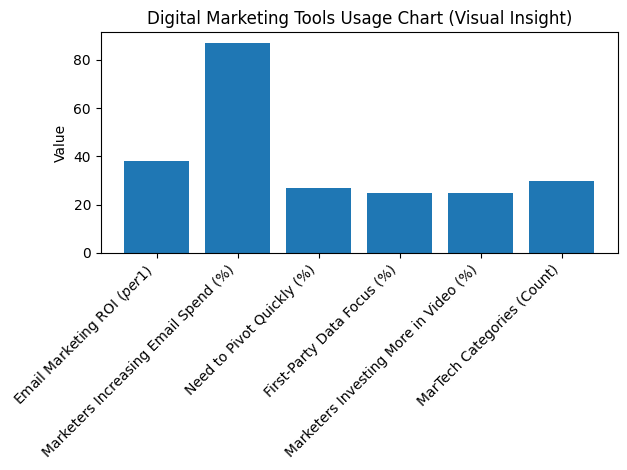
Digital Marketing Tools Usage Chart
Examining current usage trends reveals the substantial impact of digital marketing tools across the industry. The statistics tell a compelling story about where marketers are investing.
How Leading Brands Combine Tools with Strategy
Top brands don’t just collect marketing tools. They orchestrate them into cohesive systems. A strong marketing tech stack is a group of tools that work together. These tools help brands plan, run, measure, and improve marketing across the entire customer journey.
Successful companies choose tools that connect easily through APIs and built in integrations. This allows data to move smoothly between platforms and reduces manual work.
A great example is CeraVe’s Michael Cera campaign. The brand aligned social media, influencer marketing, and video content into a single 4 week story. This coordinated approach generated over 32 billion earned impressions.
For best results, marketing leaders evaluate potential tools based on five crucial factors:
- Feature richness
- Scalability potential
- User experience
- Integration capabilities
- Budget considerations
When tools work together, brands gain a full view of customer data. This makes content more relevant, improves user experience, and increases engagement and conversions. Most importantly, integrated systems reduce repetitive tasks. This gives marketing teams more time to focus on strategy, creativity, and growth.
Ready to improve your digital marketing strategy? Visit Axelris to see how our professional services can help your business grow.
The Role of Branding in Digital Marketing
Branding is the foundation of successful digital marketing. In a crowded online world, consistent branding helps businesses stay visible, recognizable, and trustworthy.
Brand consistency means every interaction feels familiar. When customers see the same message, tone, and design across platforms, they know what to expect. Research shows that 88% of customers are more likely to buy again from brands they trust.
Strong digital branding includes:
- Consistent visuals, such as logos, colors, and fonts
- A clear and recognizable tone of voice
- A smooth and reliable experience across all channels
Branding creates long term value. Unlike ads or products, a strong brand is hard to copy. While branding results may take time to measure, they build emotional connections that influence buying decisions.
Professional digital marketing protects brand consistency. This helps businesses stand out, earn trust, and build lasting customer loyalty.
Common Mistakes Businesses Make in Digital Marketing
Many businesses struggle with digital marketing, not because it doesn’t work, but because of avoidable mistakes.
- Not setting clear goals or KPIs
- Targeting the wrong audience
- Creating content without proper promotion
- Inconsistent branding across platforms
- Ignoring data, analytics, and performance tracking
- Focusing on selling instead of solving customer problems
Avoiding these mistakes helps improve engagement, conversions, and long term digital marketing success.
Key Digital Marketing Insights from Leading Brands
Successful industry giants have discovered important lessons about digital marketing effectiveness.
- Nike’s customer centric approach prioritizes understanding audience needs before launching campaigns, resulting in consistently higher engagement rates.
- Apple shows that simplicity outperforms complexity. Their minimalist messaging delivers clear value propositions across all channels.
- Coca Cola emphasizes the power of storytelling, connecting products with emotional experiences rather than focusing solely on features. Their “Share a Coke” campaign exemplifies this principle by personalizing products while maintaining brand identity.
- Starbucks showcases the importance of omnichannel consistency. It ensures customers receive identical experiences whether they engage via the mobile app, website, or in store. This approach has substantially strengthened their customer loyalty program.
The biggest lesson from these brands is clear: long term success comes from building real relationships, not short term promotions. Consistent value and trust drive sustainable growth through digital marketing.
Conclusion
Digital marketing is a powerful growth engine. Leading brands succeed by combining strategy, tools, branding, and data. Digital marketing is not a one time effort. It requires constant testing, learning, and improvement. If you want faster growth, better targeting, and measurable results, professional digital marketing makes the difference.
Ready to grow your brand with proven digital marketing strategies? Visit Axelris and let our experts help you scale with confidence
© 2026 Axelris Technologies International, Inc. All rights reserved.